As an Amazon Associate, I earn from qualifying purchases. This helps support the site at no extra cost to you.
Finding the best microphones for live drums is a different decision than finding the best drum mics for recording. In the studio, sensitivity and nuance are the priority. On a live stage, you need mics that reject bleed from adjacent sources, handle extremely high sound pressure levels without distorting, clip reliably onto drum hardware without a separate stand for every tom, and perform consistently night after night in different venues. The priorities are durability, rejection, and reliability — with sound quality built into each of those rather than treated separately.
This guide covers the best microphones for live drums across every position: kick, snare, toms, and overheads. Nine picks total, spanning a budget entry-level bundle through to professional workhorse mics, across Shure, Sennheiser, Audix, and Rode. Whether you’re mic’ing a drum kit for the first time or upgrading specific positions in an existing setup, the best microphones for live drums covered here are what actually works on real stages.
What Makes a Good Live Drum Mic
Before getting into specific recommendations, understanding what separates a live drum mic from a studio drum mic makes every other decision clearer.
High SPL handling. Drum sources — especially kick and snare at close range — produce sound pressure levels that can easily exceed 130dB. A microphone that distorts at high SPL will sound terrible on a kick drum regardless of how well-positioned it is. Every mic on this list handles the SPL demands of close-miked drums without clipping.
Rear and side rejection. On a crowded stage, a tom mic that picks up the snare from across the kit, or a kick mic that bleeds into the snare channel, creates a muddy mix that’s difficult to control. Cardioid and hypercardioid patterns — tightly focused pickup with strong rear rejection — are standard for live drum mics for exactly this reason.
Practical mounting. A live drum setup changes venues every show. Clip-on mics that attach directly to the drum rim — without a separate stand, boom arm, or floor space — are the right solution for rack and floor toms. The more complex the physical setup, the more that can go wrong during a rushed soundcheck.
Durability. Drum mics get hit. Not often, but often enough that a fragile diaphragm assembly is a liability. Every mic on this list is built for the physical reality of being close to a drummer.
The Budget Entry: Audix FP5 Drum Pack

For bands mic’ing a drum kit for the first time, the Audix FP5 Fusion drum pack is the most practical starting point — a five-mic bundle designed specifically for drum kit use that covers kick, snare, and three toms in a single, coherent purchase at a price point that removes the barrier to getting started.
The FP5 includes the Audix F6 kick mic, one F5 snare mic, and three F5 tom mics — all matched to their specific applications, all with Audix’s clip-on mounting system that attaches directly to drum rims without stands. For a band that currently has no drum mics and needs a complete kit coverage solution without extensive research into individual mic selection, this bundle gets every position covered in one order.
The honest context: the FP5 is a capable budget solution, not a professional-tier one. The individual Audix mics in this guide — the D6, D2, and the Shure and Sennheiser options — outperform their FP5 counterparts in rejection, transient response, and overall character. But the gap between no drum mics and a working FP5 setup is significantly larger than the gap between an FP5 and a professional kit. Start here, and upgrade specific positions as you identify what the FP5 is limiting.
Kick Drum Mics: The Two Standards
The kick drum is the highest-SPL, most physically demanding mic position in a live drum setup. The mic lives inside or in front of the kick, handling the full force of every beater impact at extremely close range. Two mics dominate this position in live sound: the Shure Beta 52A and the Audix D6. They approach the kick drum differently, and understanding the difference helps you choose based on your specific kick sound.
Shure Beta 52A — The Reliable Standard
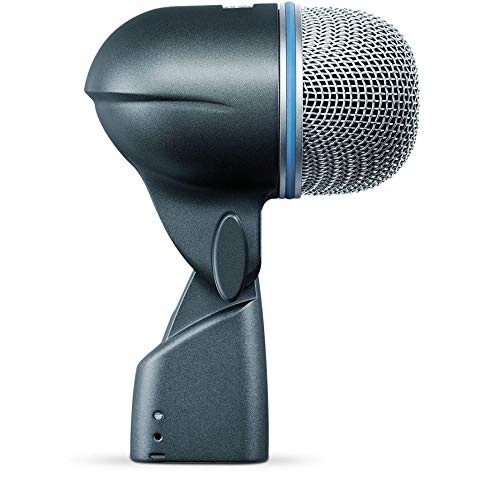
The Shure Beta 52A is the most widely used kick drum microphone in live sound — a supercardioid dynamic with a frequency response specifically voiced for kick drum, including a high-frequency presence peak at 4kHz that adds the beater click and attack that helps the kick cut through a dense live mix. Its supercardioid pattern provides excellent rejection of off-axis bleed from the rest of the kit, and its 174dB maximum SPL handling means it will never distort from the physical shock of a kick drum beater — regardless of how hard the drummer hits.
The Beta 52A produces a full, round kick sound with the presence boost already built in — what you hear in the channel with minimal EQ is close to what you want in the mix. For bands looking for a reliable, professional-sounding kick mic that works consistently across different kick drum configurations, the Beta 52A is the standard for good reason. It’s the kick mic my band uses, and it hasn’t required anything beyond basic placement and gain adjustment to produce a usable sound in virtually every venue we’ve played.
Audix D6 — The Character Alternative

The Audix D6 takes a different approach to kick drum mic’ing — its frequency response has a more pronounced low-end extension and a deeper mid-scoop than the Beta 52A, producing a sound that many engineers describe as more aggressive and more “modern” in character. Where the Beta 52A gives you a full, natural kick sound with presence, the D6 gives you a scooped, punchy kick sound with emphasized sub-bass and click that sits prominently in a dense rock or metal mix.
The D6’s VLM (Very Low Mass) diaphragm handles extreme SPL without distortion and responds quickly to the fast transients of a kick drum beater — producing a tight, defined attack rather than a softer rounded thump. Its cardioid pattern is slightly wider than the Beta 52A’s supercardioid, which can be either an advantage (more forgiving of placement variation) or a limitation (slightly less rear rejection) depending on the stage environment.
The practical choice between them: if your kick drum naturally has the weight and warmth you want and just needs the right mic to capture it, the Beta 52A is the safer starting point. If you’re after a more aggressively scooped, modern kick sound — particularly in harder-edged genres — the D6 is worth the investment. Many experienced engineers carry both and choose based on the specific drum and the room.
Snare Mics: The Versatile Workhorses
The snare drum is the most important single element in a live drum mix — the crack that defines the backbeat and cuts through the full band in every style of music. Two mics cover this position across different budgets and performance requirements, and both have a versatility that extends well beyond the snare drum itself.
Shure SM57 — The Universal Instrument Mic

The Shure SM57 is the most commonly used snare microphone in live sound — a cardioid dynamic with a flat, accurate frequency response tailored for instrument use and a proven track record of handling high SPL sources including snare drums without distortion or coloration. Its small form factor and standard stand mount make it easy to position at the snare rim at the tight angles required for close-miked snare work.
What makes the SM57 genuinely useful across a full drum setup — not just the snare — is its versatility. The same mic that works on snare also produces excellent results on rack toms when you don’t have clip-on tom mics, on the floor tom as a standalone mic, and as a guitar amp mic for every other application in our guitar amp mic’ing guide. If budget constraints mean choosing between dedicated tom mics and a versatile mic that covers multiple positions, the SM57 earns its investment across more applications than almost any other mic on stage.
Shure Beta 57A — The Snare Upgrade

The Shure Beta 57A is the supercardioid step up from the SM57 — a narrower pickup pattern, higher output, and a more pronounced presence peak that gives the snare more cut and definition in a dense live mix. Its supercardioid pattern provides approximately 9-10dB better rear rejection than the SM57’s cardioid, which directly translates to less hi-hat bleed and less kick drum bleed into the snare channel — one of the most common live drum mix problems on crowded stages.
Like the SM57, the Beta 57A’s versatility extends across the drum kit. It works equally well on rack toms — positioned at the rim edge, aimed down at the tom head — producing a tight, controlled tom sound with better isolation than a cardioid mic provides in the same position. If your band runs a tight stage with multiple drums close together and bleed between channels is a consistent problem, the Beta 57A’s supercardioid pattern on snare and toms is a meaningful practical improvement over the SM57.
Tom Mics: Dedicated vs Versatile
Toms present a specific practical challenge in live drum mic’ing: most drum kits have two or three toms that all need coverage, and running a separate boom stand to each one consumes significant stage real estate and setup time. The professional solution is clip-on microphones that mount directly to the drum rim — eliminating stands, reducing the physical footprint of the mic setup, and producing consistent placement show after show.
Sennheiser e604 (3-Pack) — The Clip-On Standard

The Sennheiser e604 is the most widely used clip-on tom microphone in live sound — a cardioid dynamic specifically designed for drum use with an integrated rim-clip mounting system that attaches securely to any standard drum hoop. A 3-pack provides coverage for a standard rack-and-floor-tom configuration with one mic to spare for a second snare, the hi-hat, or any additional drum position that needs coverage.
The e604’s frequency response is shaped for drum sources — with a presence peak that adds crack and definition to tom hits and a low-end response that captures the body of the drum without excessive boominess. Its cardioid pattern provides good rejection of off-axis bleed from adjacent drums, and its compact form factor keeps it out of the drummer’s way during performance. The integrated clip mount is secure and adjustable — positioning the capsule at the correct angle relative to the drum head without tools or additional hardware.
For a self-producing band doing their own drum mic setup at every show, the e604’s clip-on mounting system dramatically simplifies the tom setup compared to boom-stand solutions. Three clips, three connections, three channels — the toms are done in minutes rather than the extended setup process of positioning individual stands for each drum.
Audix D2 — The Tom Specialist

The Audix D2 is the professional-tier alternative to the e604 for rack tom coverage — a hypercardioid dynamic specifically voiced for tom drums with Audix’s own clip-on mounting system. Its hypercardioid pattern provides tighter rejection than the e604’s cardioid — meaningful on stages where adjacent drums are close together and bleed between tom channels is a consistent mixing problem.
The D2’s frequency response is tuned for the specific character of rack toms — with controlled low-end that captures the body of the drum without the proximity buildup that can make toms sound boxy in a dense mix, and a presence peak that adds the attack and articulation that helps tom hits cut through a full band without needing significant EQ assistance. Engineers who’ve used both the e604 and the D2 consistently describe the D2 as more controlled and more precise — particularly noticeable in the tightness of the transient response on fast tom fills.
Like the SM57 and Beta 57A on snare, the D2’s versatility extends across the kit — it also performs well on snare as an alternative or backup to a dedicated snare mic, making it a genuinely flexible investment rather than a single-position tool.
Overhead Mics: Capturing the Full Kit
Overhead microphones capture what close mics can’t — the overall air and character of the drum kit, the cymbal detail, the room sound, and the sense of the drums as a complete instrument rather than a collection of individually-miked sources. In a live drum mix, overheads are what transforms a technically correct but sterile-sounding drum channel into a drum kit that sounds like a drum kit.
Overheads require condenser microphones — dynamic mics don’t have the high-frequency detail and sensitivity needed to capture cymbal character and kit ambience at overhead distances. This means phantom power (48V) from the mixer is required. Every modern digital mixer including the XR18 provides phantom power on all inputs, so this is rarely a practical obstacle. The two options below cover budget and mid-premium overhead positions.
Rode M5 Matched Pair + SB20 Stereo Bar — Budget Overhead Standard

The Rode M5 matched pair with the SB20 stereo bar is the most practical budget overhead solution for live drum use — a factory-matched pair of small-diaphragm cardioid condensers sharing the same capsule platform as the more expensive Rode NT5, bundled with a stereo bar that mounts both mics to a single stand in ORTF or XY configuration with the angles pre-marked.
The M5’s specifications are genuinely impressive for the price: 19dB-A self-noise is quiet enough for live overhead use without the noise floor competing with the cymbal detail you’re trying to capture, and 140dB maximum SPL means the mic handles direct cymbal crashes from a few feet away without distorting — a real-world concern for overhead mics in live performance environments where mic placement is less controlled than in a studio. The 20Hz-20kHz frequency response captures the full overtone series of cymbals and the complete character of the drum kit from above.
The SB20 stereo bar included in this bundle is the feature that makes it particularly practical for live use. Rather than positioning two separate stands for the overhead pair — which consumes significant stage real estate and takes longer to set up — both mics mount to a single stand at pre-marked ORTF (110 degrees, 17cm spacing) or XY (90 degrees) positions. One stand, both overheads, consistent stereo positioning every show.
Shure SM81 — The Mid-Premium Overhead Standard

The Shure SM81 is the professional standard for live drum overheads — a small-diaphragm cardioid condenser with a flat, extended frequency response that captures cymbals, kit ambience, and the overall character of the drum kit with a accuracy and consistency that makes it the overhead mic of choice for working engineers across genres. Its 20Hz-20kHz response with a gentle high-frequency extension captures cymbal detail without the harshness that less refined condensers can produce at the top of the frequency range.
The SM81’s versatility extends beyond drum overheads — it performs equally well as an acoustic instrument mic for acoustic guitar, piano, and brass, making it one of the most broadly useful condensers in a working musician’s mic locker. For a broader look at how the SM81 fits into a complete stage mic setup, our guide to the best microphones for live bands covers mic selection across every instrument on stage.
Quick Comparison: Best Microphones for Live Drums
| Mic | Position | Type | Tier | Key Advantage |
|---|---|---|---|---|
| Audix FP5 Pack | Full kit bundle | Dynamic | Budget | Complete kit coverage in one purchase |
| Shure Beta 52A | Kick drum | Dynamic | Mid | Reliable, natural kick sound with presence |
| Audix D6 | Kick drum | Dynamic | Mid-Premium | Scooped, modern, aggressive kick character |
| Shure SM57 | Snare + versatile | Dynamic | Mid | Universal instrument mic, snare and toms |
| Shure Beta 57A | Snare + versatile | Dynamic | Mid-Premium | Supercardioid, better rejection, snare and toms |
| Sennheiser e604 (3-pack) | Toms | Dynamic | Mid | Clip-on, fast setup, standard tom coverage |
| Audix D2 | Toms + snare | Dynamic | Mid-Premium | Hypercardioid, tighter rejection, tom specialist |
| Rode M5 Pair + SB20 | Overheads | Condenser | Budget-Mid | Matched pair, stereo bar included, 140dB SPL |
| Shure SM81 | Overheads + acoustic | Condenser | Mid-Premium | Flat response, versatile, industry standard |
A Note on Condenser Mics for Live Drums
The overhead recommendations above both use condenser microphones — and that prompts a common question from bands new to drum mic’ing: can you use condensers anywhere else on the kit, and what do you need to know about using them live?
For drum overheads, condensers are the right choice — their high-frequency sensitivity and transient response captures cymbal detail that dynamic mics simply can’t reproduce at overhead distances. For close-miked positions (kick, snare, toms), dynamic mics are almost always preferable for live use — they handle the extreme close-range SPL better, reject more off-axis bleed, and don’t require the phantom power that condensers do.
The practical requirement for condenser mics on stage: 48V phantom power from the mixer. Every modern digital mixer provides phantom power on all inputs — it’s typically enabled globally or per-channel from the input settings. If you’re running an XR18, phantom power is available on all 16 XLR inputs and is activated in the X Air app per-channel. Enable phantom power on the overhead channels before connecting the condenser mics, and verify it’s active before assuming the mics are broken when they don’t work.
Building a Complete Live Drum Mic Setup
The best microphones for live drums work best when they’re integrated into a complete, coherent mic setup — not just individual mics on individual drums. Here’s how the picks in this guide combine into complete setups at different investment levels:
Getting started: Audix FP5 bundle (kick, snare, three toms) + Rode M5 pair for overheads. Eight mics, full kit coverage, all positions addressed. The overhead addition is the most significant upgrade from the FP5 alone — close mics without overheads produce a technically correct but flat-sounding drum mix.
Professional mid-tier: Shure Beta 52A (kick) + Shure SM57 (snare) + Sennheiser e604 3-pack (toms) + Rode M5 pair (overheads). This is a setup of proven workhorses at every position — each mic the standard recommendation for its specific application. The SM57 on snare also covers any additional tom position if the kit configuration requires it.
Premium gigging setup: Audix D6 (kick) + Shure Beta 57A (snare and rack toms) + Audix D2 (floor tom) + Shure SM81 pair (overheads). This combination maximizes rejection at every position through supercardioid and hypercardioid patterns on the close mics, with the SM81’s flat and detailed overhead response completing the picture.
For the mic placement details that get the most from each of these setups — where to position the kick mic inside the shell, the SM57 angle on snare, the e604 clip orientation on each tom — our complete guide on how to mic a drum kit live covers the full placement workflow for each position. And for integrating the drum channels into a complete live mix during soundcheck, our guide on how to run a soundcheck covers the drum check order and EQ approach that makes the mic investment work as well as possible in the mix.
Final Thoughts
The best microphones for live drums don’t have to represent a massive single investment — the picks in this guide are designed to be purchased incrementally, starting with whatever covers the most ground for the current budget and upgrading specific positions as the limitations of the current setup become clear. Start with a bundle if you’re starting from scratch. Upgrade the kick mic first if that’s the position that’s holding the mix back. Add overheads before upgrading the close mics if the drum mix sounds technically correct but flat.
Every mic on this list earns its place through real-world gigging performance rather than specification comparisons. The best microphone for any drum position is the one that works reliably every show, rejects what it shouldn’t pick up, and gives the engineer something useful to work with in the mix.
Frequently Asked Questions
What microphones do I need to mic a full drum kit live?
A complete live drum mic setup requires a kick drum mic, a snare mic, tom mics (clip-on dynamics for each tom), and overhead condensers. A minimum functional setup uses five to seven mics: one kick, one snare, two to three toms, and two overheads. The Audix FP5 bundle covers kick, snare, and toms in one purchase; adding a pair of Rode M5 condensers for overheads gives you a complete setup.
What is the best microphone for kick drum live?
The Shure Beta 52A is the most reliable all-around choice — trusted by working engineers across genres for its consistent kick sound, high SPL handling, and predictable behavior across different kick drum configurations. The Audix D6 is the preferred alternative for a more scooped, modern kick character with emphasized sub-bass and click. Both are legitimate professional choices — the right pick depends on the specific kick drum sound and genre.
Can I use an SM57 on drum toms?
Yes — the SM57 performs well on rack and floor toms when dedicated clip-on tom mics aren’t available. Position the SM57 at the rim edge of the tom, aimed down at the head at approximately 45 degrees, and it produces a usable tom sound with reasonable bleed rejection. Dedicated clip-on mics like the Sennheiser e604 or Audix D2 are preferable for permanent tom coverage, but the SM57’s versatility across snare, toms, and guitar amps makes it a practical multi-use investment for self-producing bands.
Do I need condenser microphones for live drums?
For overheads, yes — condenser microphones are the correct choice for capturing cymbal detail and overall kit character at overhead distances. For close-miked positions (kick, snare, toms), dynamic mics are preferable for live use due to their high SPL handling, better off-axis rejection, and lack of phantom power requirement. Condenser mics for overheads require 48V phantom power from the mixer, which is standard on all modern digital mixers.
What is the difference between the Sennheiser e604 and the Audix D2 for toms?
The e604 is a cardioid dynamic clip-on mic — the standard, widely-proven choice for tom coverage with good rejection and practical mounting. The Audix D2 is a hypercardioid dynamic — a narrower pickup pattern that provides tighter rejection of adjacent drum bleed, which is meaningful on crowded stages where toms are close together. The D2 also works well as a snare mic alternative, adding versatility that the e604 doesn’t offer in the same way.
What overhead mic configuration works best for live drums?
For live drum use, ORTF configuration — two cardioid condensers angled at 110 degrees, 17cm apart — produces a natural, wide stereo image that translates well to mono PA systems. The Rode M5 pair with the SB20 stereo bar has ORTF angles pre-marked, making consistent positioning straightforward every show. Position the pair 3-4 feet above the kit, centered over the snare-to-floor tom axis, aimed slightly down at the kit.